What it is
Fishing is one of the outdoor trades in the city. You buy a rod and a bucket, stand at the water and cast, and when a fish takes the bait you play the reel to land it. That part is quick to learn. Everything around it has depth: the rig you build in the Tackle Box, the state of the water when you cast (tide, moon, season, temperature and pressure), where you stand, whether you fish from the shore or a boat, and what you do with the fish afterwards.
There are 233 species in the waters around San Andreas, sorted into groups such as flatfish, predators, pelagics, reef fish, shellfish, freshwater game and sharks. Each group prefers certain baits, depths and temperatures, and each fights differently on the line. A journal tracks every species you catch or see, and there are skills, titles, records, clubs and a weekend tournament for anglers who want to go further.
Fishing is regulated. You can make five catches without a licence, after which you need a recreational licence from a pier office. Wardens can check your bucket and fine you for undersized, protected or out of season fish, so the guide covers the rules as well as the fun.
How to start
You need three items to begin: a fishing rod, a fish bucket and some bait. All three are sold at any bait stand. There are eight stands: Del Perro Pier, Vespucci Beach, Elysian Island, Chumash Pier, Paleto Cove, Sandy Shores Marina, the Del Perro market and the Alamo Sea marina. Walk up to the stand and press E. Basic bait costs $5 and works anywhere; shrimp bait ($8) is a good first upgrade for pier fishing because reef and shoaling fish like it.
Del Perro Pier is the easiest place to learn. It has a bait stand, an office where you buy a licence, a cleaning station, a notice board and a fish market all within a short walk, and the pier pilings themselves attract fish.

-1840.19, -1234.35Rods, buckets, bait, line, hooks and boat gear

-1843.40, -1250.80Licences and taxidermy. The cleaning station, notice board and market are next to it
You do not need a licence to make your first casts. Every character gets five grace catches. After that each cast prints a warning and a warden can fine you, so buy a recreational licence at the pier office once you know you enjoy it. It costs $350 and lasts 30 days. A commercial licence ($2,400 for 30 days) adds trawl nets and up to six pots and is for people who want to fish for a living.
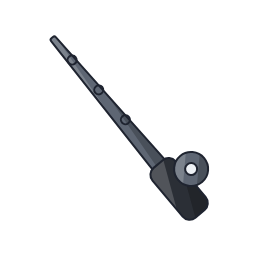
A sturdy fishing rod for catching fish

A bucket to store caught fish before selling
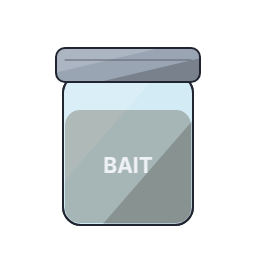
Live bait for fishing - consumed on each cast
Once you have the kit, open /fishing and start the "First cast at Del Perro" tutorial. It puts a waypoint on every step and ticks them off as you go.
Step by step
- Buy your kit at a bait stand
Press E at any bait stand and buy a fishing rod, a fish bucket and a pack of bait. Pay by cash or bank. The Del Perro stand is closest to everything else you will need on your first day.
- Face the water and cast
Stand at the edge of the pier or shore, face the water and press E. A cast report appears in chat naming the region, the tide, the moon, the water temperature, the pressure trend and the bait you are using. A HUD strip appears along the bottom of the screen for the length of the session showing your bag for the day and the line left on your spool.
- Wait for the bite
The wait depends on the water. A flood tide, dawn or dusk, falling pressure and structure such as pier pilings all shorten it. Do not walk away: moving more than a couple of metres ends the cast.
- Reel the fish in
When the fish bites, press E to start the reel. A panel opens with a track, a window that rises while you reel and sinks when you let go, and a tension bar. Hold Space, W or the mouse to reel and release to let the fish run. Keep the fish inside the window and the tension out of the red. The word above the track (run, dive, jump, tire) tells you what the fish is doing; ease off during a run and reel hard when it tires.
- Choose what to do with the catch
A landed fish opens the catch prompt: species, tier, weight, length, grade, freshness and the size limit for its group. Choose Keep, Release, Photo and release, or Tag and release. Fish marked "must release" are undersized, protected, out of season or over your bag. You have 60 seconds; after that the server keeps a legal fish and releases one that must go back.
- Sell, fillet or keep it fresh
Sell at a pier market, fillet it at the cleaning station to sell to a kitchen with
/sellproduce, list a big one at the Del Perro auction desk, or keep it. Fish lose freshness from the moment they are caught, so keep them in an iced cooler if you are not selling straight away.
Building a rig
Your rod alone works: it behaves as a plain monofilament spool with medium hooks and whatever bait is in your bag. To fish deliberately, open the Tackle Box with /tacklebox. It has six slots (rod, reel, line, hook, float or sinker, and bait or lure), a drag slider and a depth selector, and it shows three readouts computed by the server: bite odds, snap risk and fight difficulty.
Slot | What matters |
|---|---|
Line | Monofilament is the default all-rounder. Braided line holds much heavier fish but is easy for a fish to see. Fluorocarbon is nearly invisible and resists abrasion, which is what you want near wrecks and reefs. Every cast uses a little line and every snap uses a lot; the HUD warns you under 40 m and an empty spool blocks the cast. |
Hook | Small hooks for fish under 3 kg, medium (the default) for 1 to 15 kg, large for 6 to 80 kg, circle hooks for the biggest fish. Circle hooks are release friendly: a released fish on a circle hook pays full XP instead of 70 percent. A hook that is the wrong size for the fish bites less often and pulls out more often. |
Float or sinker | A float fixes your bait at the surface and a sinker on the bottom. A deep drop rig lets you fish deep water from a boat without a deep-sea rod. With nothing fitted the rig's own depth setting applies. |
Bait | Each bait has a depth, a water type (salt, fresh or both) and the groups it attracts. Fresh bait works better than stale bait, saltwater bait works badly in the Alamo Sea and a bait fished at the wrong depth is much less effective. Lures are never used up. |
Drag | Loose drag drains tension quickly but pulls hooks out; tight drag holds the fish and snaps the line sooner. Around half is a sensible default. |
Bait does not only come from the stand. On a shore with no water directly ahead, E digs for worms if you carry a bait trowel (ragworms on the Cassidy Creek, Lago Zancudo and Zancudo River shores, earthworms elsewhere). Within a few metres of pier pilings E gathers mussels. Wading in water under 3 m deep with a cast net, E throws it for live baitfish, which are the best bait for predators and pelagics but only stay alive for two hours unless you have a boat with a live well. Cut bait comes from the cleaning station: one common fish makes six pieces.
Rods wear with every fight. Below 40 condition the line snaps more and the reel window narrows; below 10 the rod will not cast. A repair kit from the bait stand restores it from inside the Tackle Box.
Reading the water
The cast report and the Conditions tab of /fishstats tell you what the water is doing. These are the things that change your bite:
Condition | Effect |
|---|---|
Tide | A 12 hour 25 minute cycle. Flood tide is the best time on shores and estuaries, low tide the worst. Open water and deep water ignore the tide. The HUD shows the state and the time to the next high or low. |
Time of day | Dawn (05:00 to 08:00) and dusk (17:00 to 20:00) are prime. Midday is slow. |
Moon | Between 20:00 and 05:00 a full moon helps and a new moon hurts. |
Pressure | Falling pressure (a front rolling in) is the single best signal. Rising pressure after a storm is the worst. |
Temperature | Each species group has a comfort band. Pelagics want warm water, freshwater game fish want cold. Outside the band a fish bites half as often. |
Season | Real months. Salmon run the rivers and lakes in September and October, trout in March, pelagics in June and July, squid under the pier lights in November. Salmon are closed November to February, trout November to January, and lobster pots are not allowed in June and July. A closed species never bites. |
Structure | Twelve marked spots (pier pilings, wrecks, kelp beds, reefs, river mouths, a dam wall and a drop-off) hold more fish and favour certain species. Within 25 m of a spot the bite improves and the listed species are much more likely. Wrecks and reefs also abrade your line. |
Events | A red tide stops all bites in a region for a few hours; an algae bloom slows them. Both show on the HUD. Sharks in the open ocean sometimes steal a hooked fish of 4 kg or more, especially if you are using cut bait or live baitfish. |
The structure spots are listed in /fishing waters with a waypoint button for each. Their map blips appear once you reach Knowledge rank 1.
Boats and pots
Any boat is a fishing platform, and some things only work from one.
Drop anchor with
/dropanchorbefore you cast so the boat does not drift the cast off. Unanchored you may drift up to 12 m, but the bite is slower.Trolling: with a carbon rod or better, drive between 2 and 5.5 m/s and the cast stays alive behind the boat. Pelagic fish are far more likely on the troll and the fight starts with a run.
Deep drop: a deep drop rig on the terminal slot in 25 m or more of water opens the deep habitat without a deep-sea rod.
Fish finder: with the item aboard, press K for a sonar overlay showing depth, bottom type, how dense the fish are, the three most likely groups and any structure in range. Species it hints at are logged as sighted in your journal.
Live well: the Tug, Dinghy, Marquis, Toro, Speeder, Squalo, Longfin and Predator keep live bait alive and slow fish decay six-fold while you are aboard. Kayaks and jet skis can fish but have no live well and cannot drop pots.
Pots: from a stationary boat (not a kayak) in 4 m or more of water, G drops a crab pot and Shift plus G a lobster pot. Crab pots soak for 90 minutes and lobster pots for 150.
/potslists them with their state. Return to the buoy and press E to haul: 2 to 8 crabs or 1 to 4 lobsters, more with crab bait in the pot. A recreational licence allows two pots, a commercial one six. A pot left more than 12 hours is lost.Spearfishing: swim under water with a speargun and a dive HUD appears with air and bolts. Left mouse fires. Speared fish cannot be released and still obey every rule.
Charters: a boat owner can start a charter with
/charter start, set a fee per guest and a captain's share, and up to five guests within 12 m join with/charter join. Everything guests sell during the trip goes into a pot that is split by weight caught when the captain ends it.
After the catch
Freshness and grade. Fish decay from the moment they leave the water, with a six hour half-life at ambient temperature. A fish cooler with a bag of ice in the same inventory triples that, and a live well multiplies it by six. Ice melts about 8 percent an hour. A fish's grade is its freshness times its condition (a perfect reel, a netted fish and a speared fish all differ) times its size against the species maximum. Grade A pays 125 percent of the market price, B 100, C 75 and D 45. Below 15 percent freshness nothing will buy it. The grade is recomputed every time anything looks at the fish, so a grade A fish becomes B on the walk home if your cooler has no ice.
Landing tools. From 6 kg you need a landing net and from 40 kg a gaff, or the fish is lost at the side about a third of the time. Both are sold at the bait stand.
Markets. Every pier market buys fish at the live price. /fishmarket shows the board anywhere: base and current price for every species, the trend against six hours ago and what has been sold today, plus a "best money right now" line. Prices fall as more of a species is sold in a day and pay a scarcity bonus when nobody has sold any. Legal markets confiscate protected fish.
Cleaning stations. Every pier has one. A fish becomes portions of fillet (about 2.5 per kilo) that you can sell to a restaurant kitchen with /sellproduce, or a common fish becomes six pieces of cut bait. Fillets keep their grade. On duty kitchen staff post orders on the pier notice board for a species with a premium over market; filling one with matching fillets pays the premium on top.
The auction. The Del Perro desk runs sealed-bid auctions that settle at 11:00 and 19:00 UK. Sellers list up to five lots of 2 kg or more with a reserve; bidders see the lots in /fishauction and bid at the desk; the highest bid at or above the reserve wins and the seller pays an 8 percent house cut.
Photo, tag and release. Releasing a fish still counts for the journal and pays 70 percent of the XP (100 percent on a circle hook). Photo and release poses for a screenshot that lands in your phone's "catches" album. Tag and release needs a tag kit and a fish of 1 kg or more: it records a code, and if anyone catches that fish again the catcher earns $150 and you earn $250.
Taxidermy. A kept fish of 8 kg or more can be mounted at a pier office for $1,500 plus $40 per kilo. Inside a property you own, /trophy places it on the wall with a plaque naming the species, weight, region and date.
Rules and the warden
You can be checked by a warden (an on duty park ranger or highway patrol officer) at any time. They see your licence, how many grace catches you have used, your bag for the day, your net and pot quota for the week and every fish in your bucket with its weight, length and flags.
Rule | Detail |
|---|---|
Licence | Recreational $350 for 30 days for rod and line. Commercial $2,400 for 30 days adds nets and up to six pots. Five grace catches before you need one. |
Daily bag | Common 20, uncommon 12, rare 6, super rare 2, legendary 1, protected 0. The HUD strip shows your count. |
Minimum sizes | Flatfish 27 cm, bottom feeders 30, predators 35, pelagic 50, shoaling 20, reef 25, shellfish 8, freshwater game 30, freshwater coarse 15, sharks and rays 90, cephalopods 15. The catch prompt tells you if a fish is under. |
Closed seasons | Salmon November to February, trout November to January, lobster pots June and July, protected species all year. |
Fines | No licence $500; undersized $150 per fish; over the bag $100 per fish; protected $2,500 per fish; closed season $400 per fish; nets or pots without a commercial licence $800; over quota $1,200. The warden can also confiscate the fish. |
Fines go on your record through the MDC like any other fine and are paid at a bank. See Custody and the law for how fines and records work in general.
Progression
Every fishing level gives you a skill point to spend in /fishskills across four trees:
Casting reaches further, bites a little faster, keeps bait fresh longer, snags less and loses less line per snap.
Angling widens the reel window, keeps hooks in, drains tension slower, wears the rod less and lets you land bigger fish without a net or gaff.
Seamanship widens the trolling speed window, adds two pots, extends sonar range, improves the live well and raises the captain's share cap on charters.
Knowledge shows bait hints and size and season on the catch prompt, adds a six hour price projection to the market board, improves tag rewards and boosts all fishing XP.
The journal (/fishjournal) tracks all 233 species with your best weight and grade. Milestones at 25, 60, 120 and 233 species pay cash, gear and extra skill points. /records shows server, personal and club records for every species. Titles such as Deckhand, Angler, Skipper, Hooksmith, Naturalist and Master of the Waters are chosen in the skills panel and shown on your catch lines.
The tournament opens every Friday at 18:00 UK and closes Sunday at 20:00 UK. Entry is free with /tournament enter. The category rotates each week between heaviest of a named species, most species and total weight, with $6,000, $3,000 and $1,500 for the top three. Clubs (/fishclub) hold up to 30 anglers under a tag and keep their own records; founding one costs $2,500.
Four daily tasks belong to fishing: release two fish, collect a pot, fillet five portions and fill a kitchen order. See the first day guide for how daily tasks work.
See also
Hunting uses the same wardens, the same cooler and the same route to restaurant kitchens.
Licences and flight school covers every licence in the city, including where fishing licences appear in
/licenses.Getting a job compares fishing with the other civilian trades.
Coral Island explains the visa you need before fishing the island's waters.
The phone covers the camera album where release photos are stored.
Tips
Related commands
/fishingEveryoneOpen the angler handbook, optionally at a section.
/tackleboxEveryoneOpen your tackle box and build the rig you cast with.
/fishstatsEveryoneOpen your fishing stats.
/fishjournalEveryoneOpen your species journal.
/fishmarketEveryoneOpen the fish price board.
/fishlicenceEveryoneShow your fishing licence status.
/potsEveryoneList your crab and lobster pots with their age and state.
/dropanchorEveryoneDrop or weigh the anchor on the boat you are driving.
/charterEveryoneRun or join a fishing charter: start, join, leave, end, fee, share.
/sellproduceEveryoneOffer your fish and meat to the restaurant, bar, cafe or bakery you are standing in. Staff on duty decide.
/fishauctionEveryoneView the lots listed for the next fish auction.
/tournamentEveryoneView or enter this week's fishing tournament.
/fishclubEveryoneManage your anglers club.
/recordsEveryoneOpen the fishing records board.
/fishskillsEveryoneOpen your angler skill trees and titles.
/trophyEveryoneMount a fish trophy on a wall in your own property.
Worked example
Dana Reyes has a rod, a bucket and a pack of shrimp from the Del Perro bait stand, and a recreational licence bought at the office on the way out. It is 06:40 and the cast report reads "Del Perro, flood tide, waxing gibbous, 19 C, pressure falling, shrimp bait". She stands beside the pilings at the end of the pier.
/me flicks the rod back and casts out past the pilings, letting the float settle.
The bite comes within a minute. She presses E, the reel panel opens with "Run" above the track, and she lets the fish take line until the word changes to "Tire", then reels steadily with the tension just under the red. The catch prompt shows a 1.8 kg sand bass, grade B, above the 20 cm limit for shoaling fish. She keeps it and the journal records a new species.
/me drops the bass into the bucket and rebaits the hook.
Her sixth fish is a 17 cm bass. The prompt says "Undersized (min 20 cm), must release". She chooses Release and takes 70 percent of the XP. The HUD strip reads 5 / 20 for common fish.
By 08:00 she has seven fish in the bucket. She walks to the cleaning station and fillets the two biggest bass into portions, then checks the notice board: Casey's Diner wants ten portions of seabass fillet at a 30 percent premium. She sells the rest of the bucket at the market next door and drives to the diner.
/do The fillets are still grade B; the bucket had no ice.
At the diner she uses /sellproduce, the order ticks off and the premium lands in her bank alongside the fillet price. Her next stop is the bait stand for a cooler and a bag of ice before tomorrow's flood tide.